
Beyond State and Market
The Roots of the Polycentric Community

The origins of the Polycentric Community emerge from a rich confluence of institutional theory and ecological science. At the structural level, the concept of polycentricity was primarily advanced by Elinor Ostrom. Her research challenged the traditional belief that shared resources must be managed by either private markets or central states. She demonstrated that multiple, overlapping centers of authority could effectively govern the commons through local cooperation and mutual trust. This discovery provides the framework for a system where governance is distributed across various scales, ensuring that those closest to the land have the agency to protect it.

In tandem with these structural ideas, pluralist economics arose from the desire to distribute productive assets more broadly among the citizenry. This movement traces its lineage back to thinkers who argued that the dignity of the human person is best preserved when ownership is not concentrated in a few hands but is accessible to all. By moving away from a singular economic model, pluralism allows for a variety of cooperative and local enterprises to flourish, each tailored to the specific needs of its community.
The final pillar of this system is regenerative economics, which shifts the focus from merely sustaining current resources to actively restoring the vitality of the ecosystem. This approach, championed by figures like John Fullerton, views the economy as a living system that must mirror the regenerative cycles of nature. In this view, true wealth is found in the health of the soil and the resilience of the biosphere. The Polycentric Community synthesizes these lineages into a unified whole, where decentralized governance and shared ownership work together to heal the environment and uphold human dignity.
How did I come across Polycentrics? My journey to the Polycentric Community is rooted in a thirty-five-year commitment to a simple but profound goal: articulating information that meets human needs. I have never viewed this work as a top-down exercise, but rather as a series of shared paths aimed at honoring the dignity of the person and the health of our ecology. My understanding of pluralist regenerative economics was not formed in a vacuum; it was forged firsthand through my work in India, Cambodia, and across Europe and the US, where I saw that the most resilient systems are those grown from the ground up.
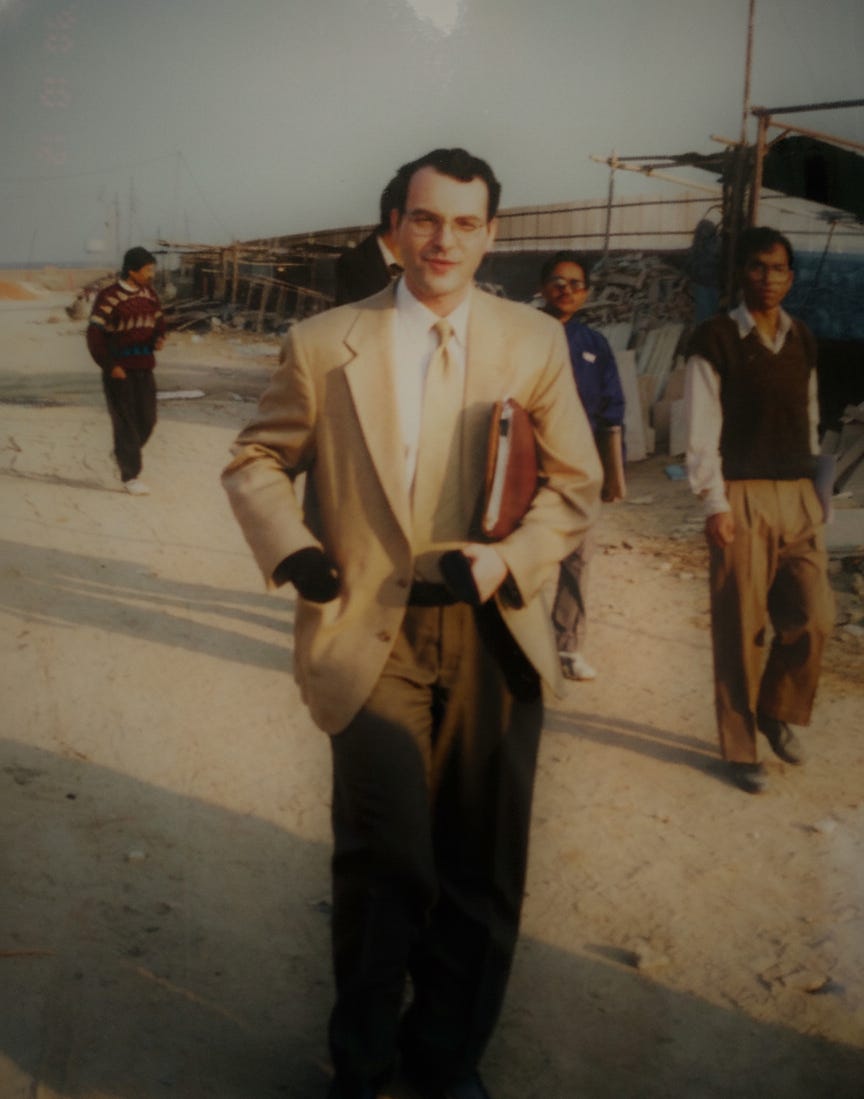
A defining chapter of this effort took place between 2002 and 2012, during my time as Adviser for Research, Publications, and Communications with Dignity International. There, my work was anchored in the realization that economic, social, and cultural rights are fundamental human rights. This conviction led me to co-author an article in the anthology Disrespect Today, Conflict Tomorrow, exploring how the politics of these rights shape our collective stability.
Integrating Research and Political Evolution
My academic contributions have further refined this vision. Published by Taylor & Francis/Routledge in the journal International Critical Thought, my peer-reviewed research on the history and application of Agrotowns concluded that traditional ownership of land remains a significant barrier to revitalizing rural areas and creating sustainable communities.
However, history and personal experience have also taught me that the state—even in socialist transitions—is often inefficient at promoting or sustaining ecological agriculture and rural planning. Through my research and experiences at the Center for Marxist Education in Cambridge, Massachusetts (2016–2020), I came to understand that the 19th and 20th century socialist models of governance fail to provide the level of participation and agency necessary to empower communities in the long term.

A Vision for the Future
Today, I combine my education in history, writing and teaching, with a passion for community-led progress. I see my role as providing the necessary context and inspiration for communities to work together effectively, ensuring that our collective actions are informed by the lessons of the past and a clear vision for a regenerative future. By weaving together research and communication, I strive to ensure that the Polycentric Community becomes a system where information serves the people, and where every node of our society has the knowledge it needs to flourish.
Most importantly, I am working on this project with the intention of letting it be used, changed, and otherwise adapted to the needs of the people who see value in it. Welcome to the Polycentric Community! Let’s get busy.
Very interesting
Would be interested in what you think of democratic confederalism also